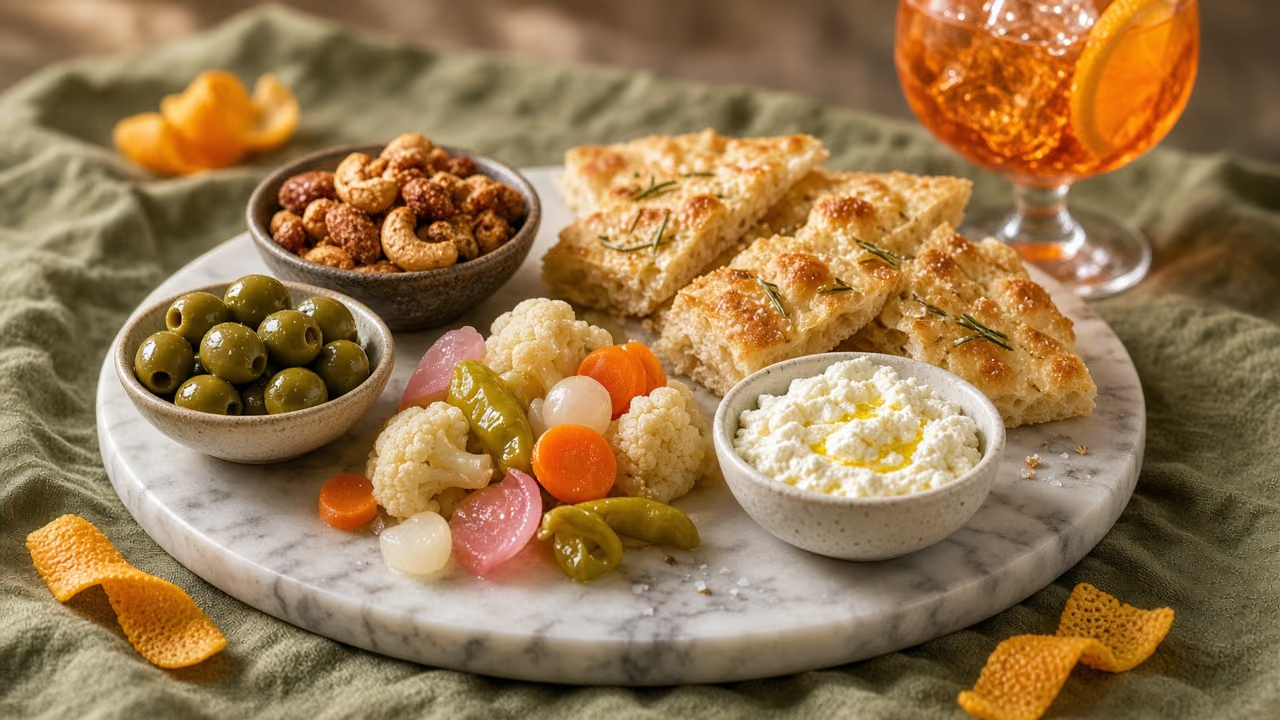
The plate
Food that belongs beside the glass
Bitterness asks for salt, fat, crunch or vinegar. Build a small plate that makes the drink taste finished — then stop so dinner still happens.
At a glance
- Salt, fat, crunch, acid
- Four tools
- A bite, not a meal
- Portion
- Citrus, olive, bread
- With a spritz
- Fat and hard cheese
- With a Negroni
The plate is not a side project. A bitter drink on an empty stomach is a lecture. The same drink next to salt and fat is a conversation. Italian aperitivo food — stuzzichini, cicchetti, a bowl of olives — exists to make the glass make sense.
This hub does not publish prices, chef specials or named dining rooms. It publishes a method you can run in an Australian kitchen.
The four tools
Salt. Olives, salted nuts, anchovy, cheese rind, potato crisps. Salt is the fastest way to make bitterness taste like a choice.
Fat. Oil on bread, a soft cheese, a handful of almonds, a slice of something cured. Fat lengthens the drink and keeps the alcohol from feeling sharp.
Crunch. Bread, nuts, a raw fennel stick, a crisp. Texture is how a small plate feels like hospitality.
Acid. Pickled vegetables, lemon on seafood, a tomato that is actually ripe. Acid resets the palate so you can go back to the bitter glass — and still want dinner.
You do not need all four on one board. You need one of them done properly.
Pairing by drink
Spritz (IBA 90/60/splash). Wet, orange, sparkling. It likes olives, potato crisps, a piece of focaccia, fennel, and anything with orange or lemon on it. It does not like a heavy cream dip that coats the mouth. The long snack guide is cicchetti and snacks.
Americano. Bitter and winey, lengthened with soda. It is more flexible than a Negroni. Cheese, olives, and a tomato or pepper relish all sit well. Keep portions small; the drink is already a food-friendly length.
Negroni. Dense, gin-bright, Campari-bitter. Pair intensity with intensity: hard cheese, olives, roasted nuts, a fatty fish. A sweet pastry will fight it. If the only snack you have is mild, add salt.
Vermouth on ice. Treat it like wine. Dry vermouth likes olives, almonds and lemon. Sweet red vermouth likes hard cheese and orange peel. Taste the wine first; tired vermouth will make any pairing taste stale.
An Australian grammar
You do not have to import a theme. The method works on local produce:
- A lemon-dressed oyster is acid and brine next to a spritz. We are describing a flavour, not a restaurant plate.
- Cheddar or a firm goat cheese can stand in for a mountain cheese.
- Grilled zucchini, roasted peppers or a sliced tomato with oil are vegetable stuzzichini.
- Salted peanuts are not elegant and they are correct.
- Good bread and olive oil is a complete snack if the oil tastes of something.
Avoid building a second dinner. If you need a knife and a warming drawer, you have left aperitivo. The hosting hub is about keeping the tray small.
Allergies, abstinence, children
The hour can include people who are not drinking. Put water on the table as if it were a course. Put a bitter soda or a citrus-and-soda in a proper glass. Do not make the snack table a reward that only appears with alcohol.
This site is 18+ for the drinks. Food is food. If children are at the table, the olives and bread are for them; the Campari is not. Read the NHMRC page rather than anything we could invent about “safe” serves.
A weeknight board versus a Saturday board
On a weeknight you need ten minutes and one bowl. Olives, whatever cheese is already in the fridge, water, the drink. That is enough to make the glass honest. On a Saturday you may add bread, a second bowl, a vegetable you sliced while the ice froze. You still should not add a project that keeps you in the kitchen while guests hold empty glasses.
If you are alone, the same grammar holds. Aperitivo does not require an audience. It requires a pause. One glass, one salty thing, then the meal you were going to cook anyway.
Drinks that change the plate
A Spritz wants brine and starch because it is already wet. A Negroni wants fat because it is already dense. Vermouth on ice wants to be treated like wine: the snack should not be sweeter than the glass. If you only remember one pairing rule, remember that. The rest is preference.
Citrus is a bridge, not a fruit salad. The IBA already puts orange on the Spritz and Negroni and orange-plus-lemon on the Americano. Putting more orange on the plate is harmony. Putting icing sugar on the plate is an argument.
What we will not plate
We will not reconstruct an old restaurant menu from this domain’s archive. We will not invent a “must-try” list for a suburb. We will not quote a chef we cannot cite. If you want to pitch a pairing essay, bring a method and a source — a producer page, a standard recipe, a piece of produce in season — not a ranking. The long snack essay is cicchetti and snacks. Use that when you want Venetian scale; use this hub when you want the four tools.
What people ask first
What food is served with aperitivo?
What should I pair with an Aperol Spritz?
The drink is wet and orange; it likes salt more than sugar.
What should I pair with a Negroni?
Hard cheese, olives, nuts or a cured fish will stand up to Campari and gin. Soft sweetness will lose.
Can the food be Australian rather than Italian?
The grammar is flavour, not passport. A lemony oyster, a sharp cheddar, or grilled zucchini can do the same job as a cicchetto.
Pitch a drinks or food guide
Guest posts that teach a recipe, a pairing or a producer — with primary sources — are welcome. We do not publish venue round-ups or invented rankings.