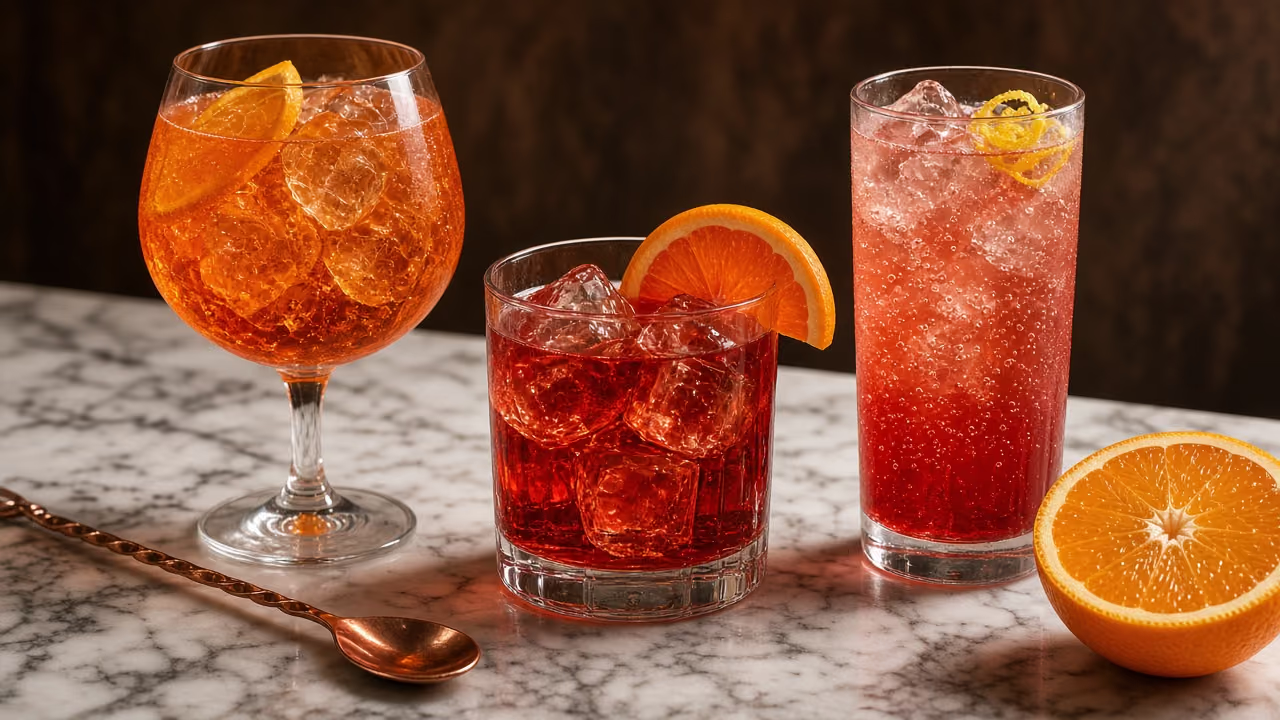
Recipe guide
How to make the IBA Spritz
The official Spritz is a wine drink with a bitter accent, not an equal-parts punch. Here is the IBA build, the glass, the ice, and the variations the Association already names.
At a glance
- 90 ml / 60 ml / splash
- Official measure
- Wine glass, full of ice
- Glass
- Orange slice
- Garnish
- iba-world.com
- Source
The short answer is a sentence you can take to the bench: 90 ml Prosecco, 60 ml Aperol, a splash of soda, wine glass, ice, orange slice. That is the International Bartenders Association Spritz. Everything else on this page is how not to accidentally make a different drink.
This is a long guide because the Spritz is the most copied aperitivo cocktail in Australia and the most often “improved” into something the IBA did not write. Equal parts. Extra syrup. A random sparkling wine. A champagne flute. Those are drinks. They are not this one.
What the official recipe actually says
From the IBA page, quoted as measures not as atmosphere:
- 90 ml Prosecco
- 60 ml Aperol
- Splash of soda water
- Build into a wine glass filled with ice
- Stir gently
- Garnish with a slice of orange
- Note: other versions use Campari, Cynar or Select instead of Aperol
Three things jump out.
First, Prosecco is named. The official drink is not “a spritz with any bubbles”. If you use another sparkling wine, say so. The wine’s dryness, bubble and apple-pear note are part of the balance against Aperol’s orange bitterness.
Second, soda is a splash. It is not a third equal pillar. Internet recipes that go 60/60/60 are making a longer, more diluted, less wine-like drink. That can be pleasant. It is not the IBA Spritz.
Third, the glass is a wine glass full of ice. Not a flute (too narrow, no ice farm). Not a tiny coupe (no room). The ice is a structural ingredient. It chills, it dilutes, and it is why you do not need to shake.
Why the drink belongs to aperitivo
Aperitivo is the hour that opens dinner. A Spritz is useful there because it is wet, cold, bitter-orange and modest compared with a stirred gin cocktail. It is a patio drink and a kitchen-bench drink. It is not a dessert and it is not a nightcap.
The bitterness is the point. Aperol is an orange aperitivo, lighter than Campari, created — per brand history — by the Barbieri brothers in Padua in 1919 and now in the Campari Group. We do not print an invented ABV. We print the method. If the drink tastes like orange soft drink, you have too little ice, too much soda, or a Prosecco that is already sweet.
A home method that does not fight the IBA
- Chill the Prosecco and the soda. Aperol can live in the cupboard; the wine cannot live warm.
- Fill a wine glass with ice until the ice is the architecture, not a garnish.
- Pour the Prosecco first. It will foam; give it a second.
- Pour the Aperol over the wine.
- Add a splash of soda — enough to lift, not enough to turn the glass pink-orange and thin.
- Stir once or twice, gently, so you do not flatten the wine.
- Garnish with a slice of orange. The IBA says a slice, not a forest of dehydrated wheels.
Taste. If it is too bitter for the person you are handing it to, you may add a little more wine — still a Spritz family drink, now a house pour. If it is too sweet, you may add a little more soda or a squeeze of orange. If you add gin, you have left the page.
Ice is not optional
Australian late afternoons are why this drink travelled. They are also why a half-hearted ice cube fails. Melted water is part of the recipe; flood water is not. Use fresh, hard ice. Do not use the frostbitten bag that tastes of the freezer. Do not pre-batch a Spritz in a jug unless you are serving immediately — the bubbles will not wait for a speech.
If you are hosting, the hosting guide is about trays and pacing. The recipe itself stays per glass.
Variations the IBA already permits
The Association’s own note is the only variation list this site will treat as official: Campari, Cynar or Select instead of Aperol.
- Campari Spritz. More bitter, redder, less candy-orange. Still 90/60/splash unless you decide otherwise and say so.
- Cynar Spritz. Artichoke-bitter, greener in mood, excellent with salty nuts.
- Select Spritz. A Venetian red bitter; call it a Select Spritz.
Australian bitters can stand in if you are honest. A Marionette bitter curaçao spritz is a local orange-bitter drink. It is not an Aperol Spritz. Put the name on the tray.
A sbagliato is not a Spritz and not a Negroni. It is a Negroni whose gin has been replaced with sparkling wine. Different family, different page — see Negroni and Americano.
Food that makes the glass make sense
Salt first. Olives, crisps, focaccia, fennel, a lemony vegetable. The drink is sparkling and orange; sugar-on-sugar is how you lose dinner. The pairing grammar is in cicchetti and snacks and the food hub.
Alcohol, age, and what we will not say
This recipe is for readers 18 and over. We will not invent a “light enough to have three” line. A wine-based cocktail is still alcohol. If you need official Australian health advice, use the NHMRC and DrinkWise. If you are not drinking, a bitter soda with orange and ice in the same wine glass keeps you in the ritual without borrowing someone else’s ABV.
We will not attach prices. We will not name a bar as the “best Spritz in Australia”. We will not quote a brand ambassador. The citable object is the IBA page; this guide is a method for not losing that object on the way to the fridge.
A worked shopping list, still without prices
- A bottle of Prosecco you will finish while it still sparkles
- Aperol, or the bitter you have honestly substituted
- Unflavoured soda water
- Oranges
- Ice
- Wine glasses
That is enough for a household hour. If you want the local wine and bitter chapter, read Australian aperitif makers. If you want the cultural hour around the glass, read what aperitivo is.
Common ways the drink goes wrong
The flute. No ice, no width, a warm, foamy shot. Use a wine glass.
The equal-parts internet. Heavier, sweeter, less wine. Fine as a house drink; different from official.
The warm bottle. Prosecco poured from a 22-degree cupboard dies in the glass.
The syrup. The IBA recipe has no sugar syrup. If you add it, you are sweetening a drink that is already orange.
The garnish pile. One slice. The drink is not a fruit salad.
The second litre. If the hour has become a session, you have left aperitivo. Take the glasses away and eat.
Why this page exists on a rebuilt domain
The old site on this domain advertised restaurant drinks. This page does not restore a menu. It teaches a public, official recipe so the word aperitivo on the URL means something a reader can do at home. If you came from /drinks-menu/, that path 301s here to the cocktails hub. The recipe you wanted is this one — rewritten, sourced, and finished with an orange slice.
Prosecco, in practice
The IBA names Prosecco. It does not name a cuvée. Buy a dry bottle you will finish. Extra-dry and brut are the usual supermarket words; we will not invent a ranking among them. What matters is that the wine is cold, sparkling, and not a dessert bottle. If the only sparkling you have is a sweet non-Prosecco, you can still make a spritz. Call it a house spritz. Do not call it the official one.
Once the bottle is open, it is on a clock measured in hours, not weeks. A stopper helps. A fridge helps more. Yesterday’s flat wine is a cooking ingredient.
Soda, citrus, and the splash
Unflavoured soda water. Not tonic (quinine plus sugar will rewrite the drink). Not lemon soda (you have already got orange from the Aperol and the garnish). The splash is a lift. If you can no longer taste wine, you have poured a cooler.
The orange slice is specified. A wheel that sits in the glass is enough. Expressing a peel over the top is optional theatre. A dehydrated fan of citrus is decoration for a photograph, not a requirement of the Association.
Hosting a table of Spritzes
Build to order. Keep a wine glass farm of ice. Keep the Prosecco in a bucket or the fridge, not on a sunny bench. If ten people arrive at once, you may pre-ice the glasses and pour in a line — still per glass, still wine then bitter then soda. See hosting aperitivo at home for the tray and the stop.
If half the table is not drinking, build them the same glass with a bitter soda or orange-and-soda so they are not holding a warm mug. 18+ still applies to the Aperol. The NHMRC and DrinkWise remain the health pages.
A last pass before you pour
- Wine glass, not flute
- Ice as architecture
- 90 / 60 / splash
- Stir once
- One orange slice
- A salty bite waiting
- Dinner still on the plan
That is the official Spritz, carried into an Australian kitchen without a venue list and without a rewritten archive menu. If you want the cousins, stay on this site: Negroni and Americano for the Campari family, Australian aperitif makers for a local bitter you will name out loud.
What people ask first
How do you make an Aperol Spritz?
That is the International Bartenders Association recipe.
Is the Spritz equal parts?
The official drink is wine-led: more Prosecco than Aperol, with only a splash of soda.
Can I use Campari instead of Aperol?
The IBA notes other versions that use Campari, Cynar or Select. Call those by the bitter you poured.
Should I shake a Spritz?
The IBA method is to build and stir. Shaking knocks the bubbles out of the wine.
Pitch a drinks or food guide
Guest posts that teach a recipe, a pairing or a producer — with primary sources — are welcome. We do not publish venue round-ups or invented rankings.