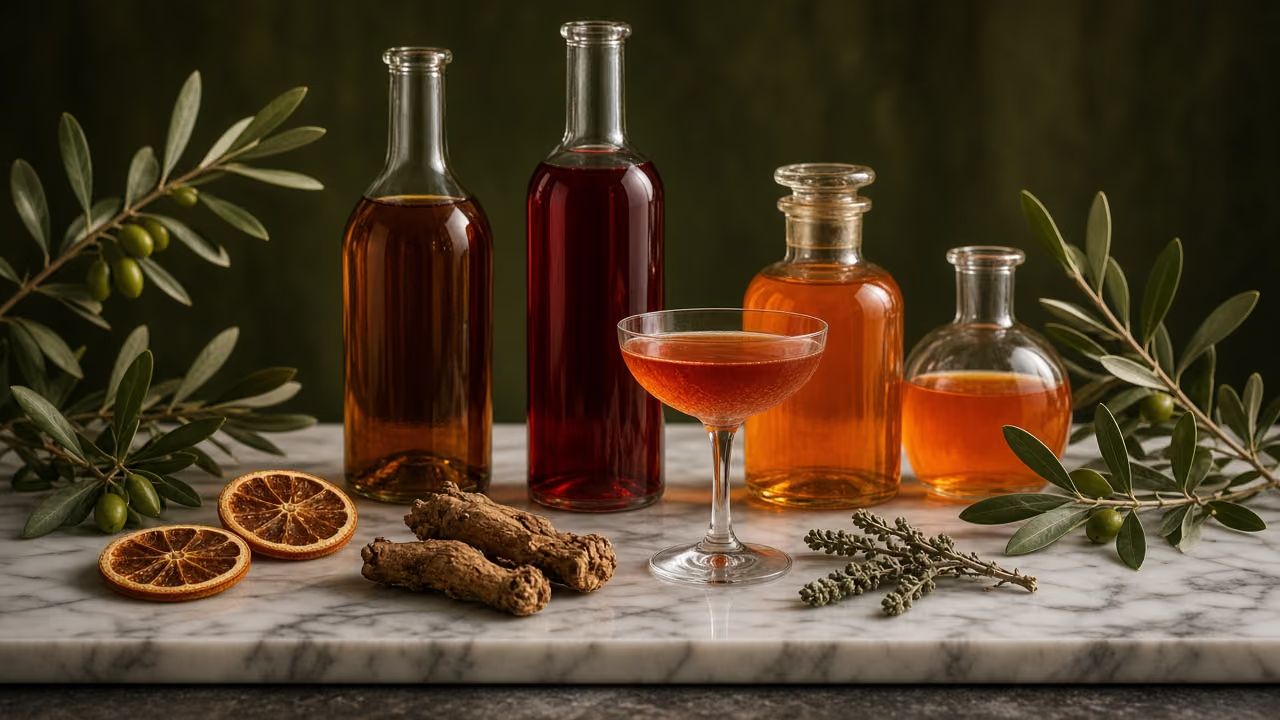
The bottles
Bitters and vermouth
Aperitivo lives in two families of bottle — aromatised wine and bitter aperitifs. Learn what they are, how they differ, and why the fridge is part of the recipe.
At a glance
- Fortified, aromatised wine
- Vermouth
- Wormwood
- Key botanical
- Refrigerate
- After opening
- Campari, Aperol, Select
- Bitter cousins
The home bar that can do aperitivo is smaller than it looks. You need a bitter aperitif, a vermouth, something cold and something sparkling. Everything else is variation. This hub is about those two bottle families — and about not treating them like shelf-stable spirits.
Vermouth is wine
Vermouth is aromatised and fortified wine. The botanical picture includes wormwood, the plant that gives the category its name (from German Wermut). The Turin maker Carpano is the usual starting point for the modern sweet style; producer histories place Antonio Benedetto Carpano’s vermouth in 1786. We treat that as brand history, not as a folklore date we invented.
Styles you will actually buy in Australia:
- Dry — pale, lean, built for martinis and for drinking on ice with citrus. Maidenii describes its Dry as designed with the classic Martini in mind. Regal Rogue Daring Dry is a sauvignon-blanc-based extra-dry vermouth. 78 Degrees publishes a dry vermouth on McLaren Vale Chenin Blanc.
- Sweet red — the vermouth in the IBA Negroni and Americano. Darker, spiced, the bottle that makes equal-parts drinks taste finished.
- Bianco / rosato / other — house styles. Drink them on ice before you invent a cocktail for them.
Because the base is wine, oxygen is the enemy. Cap it, refrigerate it, and finish it on a kitchen timescale. Regal Rogue’s varietals page says 75% of vermouth is wine-based, and tells you to refrigerate and consume within 60 days, or cook with what remains. That is a producer instruction. Other makers may differ; read the bottle in your hand.
A longer explainer lives in vermouth explained.
Drinkable bitters, not dashed bitters
English uses bitters for two different objects. Angostura-style cocktail bitters are a concentrate you dash. Aperitivo bitters are a drink: red or orange, poured in centilitres, lengthened with wine or soda.
The three Italian names you will see on official cocktail pages and on Australian shelves:
- Campari. The IBA specifies “Bitter Campari” in the Negroni and the Americano. Campari Group’s brand history attributes the recipe to Gaspare Campari in the nineteenth century. We do not invent an ABV or a secret formula.
- Aperol. The IBA Spritz is an Aperol drink. Brand history places the creation with the Barbieri brothers in Padua in 1919; Aperol is now in the Campari Group. It is lighter and more orange than Campari. Swapping them changes the drink’s identity.
- Select, Cynar and the rest. The IBA Spritz note already names Campari, Cynar or Select as alternate bases. Cynar is artichoke-bitter. Select is a Venetian red bitter. Use the name of the bottle you poured.
Marionette, in Australia, makes a bitter curaçao the producer itself puts in Negroni- and Americano-shaped serves. That is a local bitter orange, not a Campari replica, and should be labelled as such.
How bitterness behaves in a glass
Bitterness needs dilution and contrast. Soda, sparkling wine and ice are not “watering it down”; they are how the drink stays a prelude. Sweet vermouth is the other half of that contrast — sugar and spice against quinine, gentian and orange peel.
If a drink tastes like medicine, you probably under-iced it or skipped the salty bite. If a drink tastes like orange soft drink, you probably over-sweetened it or used a tired vermouth that has gone to varnish. Taste the vermouth alone, cold, before you blame the bitter.
A working Australian shelf
You do not need every bottle. A useful first shelf is:
- One red bitter (Campari if you want the official Negroni).
- One orange aperitivo (Aperol if you want the official Spritz).
- One sweet red vermouth and one dry vermouth.
- Prosecco and soda, kept cold.
- Optionally, one Australian bottle from the producers hub so the tray is not only imported names.
Buy small formats when you can. A half-bottle you finish is better than a litre you forget. Write the open date on the label. That is not a statistic; it is kitchen hygiene.
A tasting order that does not wreck dinner
If you are learning bottles, taste from lean to dense: dry vermouth on ice, then an Americano, then a Negroni. The other direction numbs the first wine. Keep water and a salty bite on the table the whole time. You are still in aperitivo, not in a spirits class.
If you are only opening dinner, skip the flight. One bottle, one method, one garnish. The IBA pages exist so you do not have to improvise the spine.
What we will not rank
There is no “best vermouth in Australia” on this site. There is no points table. There are producers who publish what they put in the bottle, and official cocktails that name a style. If a guest post wants to compare two bottles, it needs a method and a citation — not a trophy. The long pantry essay is vermouth explained. The local names sit in Australian producers.
What people ask first
What is vermouth?
It is a wine product, not a spirit, which is why it ages in the fridge after you open it.
What is the difference between Campari and Aperol?
They are not interchangeable in an official Negroni.
Should vermouth be refrigerated?
Once opened it behaves like wine. Regal Rogue tells drinkers to refrigerate and consume within 60 days.
Is bitters the same as Angostura?
Dashed cocktail bitters are a concentrate. Aperitivo “bitters” are drinkable aperitifs you pour by the measure.
Pitch a drinks or food guide
Guest posts that teach a recipe, a pairing or a producer — with primary sources — are welcome. We do not publish venue round-ups or invented rankings.