Pantry guide
Vermouth explained
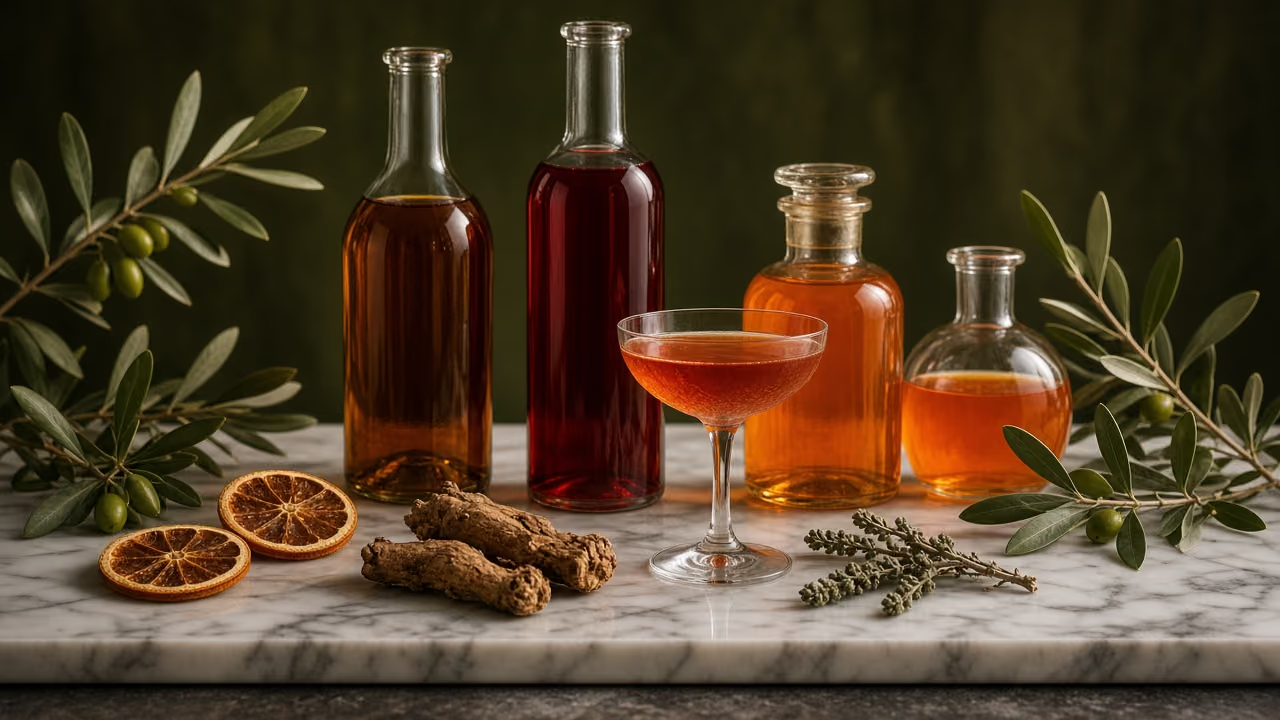
Vermouth is wine first. The botanicals, including wormwood, are the accent. Treat the open bottle like wine and the cocktails will stop tasting tired.
At a glance
- Aromatised fortified wine
- Category
- Wormwood
- Marker botanical
- Fridge, not shelf
- After opening
- On ice, or in a cocktail
- In aperitivo
Vermouth is the most underestimated bottle on an Australian home bar and the one most often abused. People stand it next to the gin, treat it like a spirit, and then wonder why their Negroni tastes like furniture polish. The fix is conceptual: vermouth is wine. Fortified, aromatised, still wine.
This guide is the pantry essay for aperitivo. It does not rank bottles. It explains the category, the styles you will actually see, the storage rule we can cite, and how to drink the stuff without a cocktail shaker.
What the word is pointing at
The English word comes, via French, from German Wermut — wormwood. Wormwood (species in the Artemisia genus) is the botanical marker of the category. Other herbs, roots, peels and spices ride along. The liquid underneath is wine that has been fortified with a spirit and sweetened to a house level.
European food law treats vermouth as an aromatised wine, not as a liqueur and not as a bitter aperitif like Campari. You will taste the overlap — gentian, citrus peel, spice — but the structure is wine. That is why oxidation matters. That is why a two-year-old open bottle is a cooking ingredient at best.
Producer histories in Turin place Antonio Benedetto Carpano’s sweet vermouth in 1786. We repeat that as brand history, not as a myth we wrote. Later houses — the names on supermarket shelves — are variations on that aromatised-wine idea.
Styles you will buy
Dry. Pale, lean, sometimes extra-dry. The bottle you put in a martini, or on ice with a lemon or olive. Maidenii describes its Dry as designed with the classic Martini in mind and lists botanicals including wormwood, strawberry gum, wattle seed and river mint. Regal Rogue Daring Dry is built on organic sauvignon blanc and publishes a sugar figure on its own page; we will not invent a comparison table around it. 78 Degrees publishes a Chenin-blanc dry vermouth with karkalla and citrus natives.
Sweet red. The dark bottle in the IBA Negroni and Americano. Spice, citrus peel, a little sweetness to argue with Campari. If a recipe says “sweet vermouth” and you pour dry, you have made a different, leaner drink.
Bianco, rosato, amber, house styles. Useful on ice. Taste them before you force them into a nineteenth-century template.
“Aperitif” branding. Some Australian bottles call themselves aperitifs first and vermouth second. If the producer says the base is wine and the botanicals include wormwood or a vermouth-like bill, treat it as this category for storage purposes even if the front label is more romantic.
The fridge rule we can cite
Regal Rogue’s varietals page says 75% of vermouth is wine-based, and tells you to refrigerate after opening and consume within 60 days — or cook with the rest. That is a primary instruction. Other producers may print different windows. When they do not, the wine logic still holds: cap it, chill it, finish it.
Write the open date on the label. Buy the smallest bottle that makes sense for how you actually drink. A half-bottle you finish is a better investment than a litre you forget, even though we will not print a price.
Do not store opened vermouth next to the oven. Do not store it in a sunny window “because it looks Italian”. Light and heat are how wine becomes a stain.
How to taste a new bottle
Pour 40–50 ml over ice in a small wine glass. Add a strip of lemon for dry, orange for sweet red. Do not add soda yet. What you want to know:
- Is the wine still alive, or is it flat and brown in the nose?
- Where is the bitterness — peel, root, herb?
- Is the sweetness a finish or a syrup?
Then, if you want a longer drink, add soda. That is an Americano-shaped instinct without Campari, and it is a legitimate aperitivo. Then, and only then, put the bottle into a cocktail.
Where vermouth sits in aperitivo
On its own, vermouth is the drink. You do not owe anyone a performance. A dry vermouth, ice, olive, late light — that is the ritual with less theatre than a Spritz and more wine than a Negroni.
In a mixed drink, vermouth is the mid-palate. In the Negroni it is one third of the architecture. In the Americano it is half the flavour before soda. In a Spritz it is usually absent (the wine is Prosecco). If you add vermouth to a Spritz you have invented a house drink; name it.
Australian natives — pepperberry, myrtle, wattleseed, saltbush — show up on the producer pages cited above. They are not a ranking category. They are a flavour you can taste if you stop drowning the wine in warm gin.
Vermouth and food
Treat dry vermouth like a white wine with herbs: olives, almonds, lemon, a firm cheese. Treat sweet red like a spiced red: hard cheese, orange peel, nuts. Tired vermouth makes every pairing taste stale, which is why storage is a pairing issue.
The wider plate grammar is in cicchetti and snacks.
What vermouth is not
It is not dashed cocktail bitters. Angostura-style bitters are a concentrate. Vermouth is a drink.
It is not Campari. Campari is a bitter aperitif. They share a glass in the Americano; they are not substitutes.
It is not shelf-stable like vodka. If your household treats all bottles the same, vermouth will always be the one that disappoints.
It is not a venue product. This site will not tell you where to order a “vermouth flight” as if we had checked the rooms.
Cooking with the last glass
Regal Rogue’s own page mentions cooking with leftover vermouth. That is sensible. Dry vermouth in a pan with mushrooms or mussels is a classic kitchen move. Sweet red in a reduction for onions is another. Cooking is how you honour a bottle that has started to fade without pouring a bad Negroni.
A working Australian shelf
- One dry vermouth you like on ice
- One sweet red you will actually finish
- Fridge space
- Citrus
- A marker for the open date
If you want a local first bottle, start with a producer page, not a trophy list: Maidenii, Regal Rogue, 78 Degrees. Read what they say they put in the wine. Then taste.
The citation rule, applied
We have not given you scores. We have not given you a “world’s best” line, even when a producer’s own marketing uses prize language — that language stays on their page. We have given you a category definition, three Australian primary links, an IBA reason to care about sweet red, and a storage instruction with a URL. If a fact is missing, it is because we would have had to invent it.
For the cultural hour around the glass, read what aperitivo is. For the mixed drinks that depend on this bottle, read Negroni and Americano. For more local names, read Australian aperitif makers.
Alcohol remains 18+. Vermouth is not “basically wine, so it does not count”. It counts. The NHMRC and DrinkWise are the health pages; this is the pantry page.
Fortification, sweetness, and what we will not quantify
Vermouth is fortified: a spirit is added to the wine. It is also sweetened to a house level. Those two facts explain both the longer open-bottle life compared with unfortified wine and the fact that it still dies on a warm shelf. We will not invent residual-sugar tables for bottles we have not been given numbers for. When a producer publishes a sugar figure, it lives on their page — Regal Rogue does this for some varietals. We point; we do not build a league.
Bitterness in vermouth often comes from wormwood, gentian, peel and spice. Bitterness in Campari is a different recipe. That is why the Americano is a conversation between two bitter ideas, not a doubled vermouth.
A week in the life of a bottle
- Day 0. Open, taste, date the label, fridge.
- Days 1–14. On ice, or in an Americano / Negroni. This is the bottle at its most itself.
- Later. Still usable if it smells like wine and spice, not like varnish. When in doubt, cook.
- Never. Back on the sunlit shelf “because we might make martinis at Christmas”.
If you drink vermouth once a quarter, buy small or accept that you are buying a cooking bottle. That is household maths, not a statistic.
Related reading
Bitters and vermouth is the hub. Australian aperitif makers is the local citation list. Negroni and Americano is why sweet red earns its keep. Hosting is where the bottle meets a tray. The official mixed-drink spine remains the IBA: Negroni, Americano. The Spritz, for once, leaves vermouth on the bench and uses Prosecco instead — IBA Spritz.
What people ask first
What is vermouth?
It is a wine product, which is why an open bottle belongs in the refrigerator.
Should vermouth be refrigerated?
Regal Rogue tells drinkers to refrigerate opened vermouth and consume it within 60 days, or cook with what remains.
What is the difference between dry and sweet vermouth?
Sweet red is darker and spiced, and it is the style the IBA names in the Negroni and Americano.
Can I drink vermouth without mixing it?
A cold pour on ice with citrus is a complete aperitivo. That is often the best way to learn a new bottle.
Pitch a drinks or food guide
Guest posts that teach a recipe, a pairing or a producer — with primary sources — are welcome. We do not publish venue round-ups or invented rankings.